The colour wheel and wet-on-wet oil painting
A guide from Grace O'Malley, founder of Watershed Studios and instructor of our oil painting classes in Bushy Park, Galway. Start with the wheel, then put it to work on the canvas.
Meet your instructor
Grace O'Malley founded Watershed Studios in 2018 and has welcomed more than 300 artists and writers to the Connemara coast since. A practising oil painter, she teaches the way she paints: directly, patiently, and with the belief that colour is learned by doing, not by memorising.
Her three-hour classes cover everything on this page and more, with basic materials provided and places limited to 25.
Book a class with GraceTap the wheel to pause it.
Pick a colour
How to read the wheel
Primary colours
Red, yellow and blue cannot be mixed from anything else. Every other colour on the wheel is born from these three, so treat them as the foundation of your palette.
Secondary colours
Mix two primaries and you get orange, green and violet. In oil paint these mixtures are almost always richer than the same colour squeezed straight from a tube.
Complementary colours
Colours opposite each other, like blue and orange, intensify each other when placed side by side and calm each other when mixed. This is the painter's most useful trick.
The Watershed colour wheels
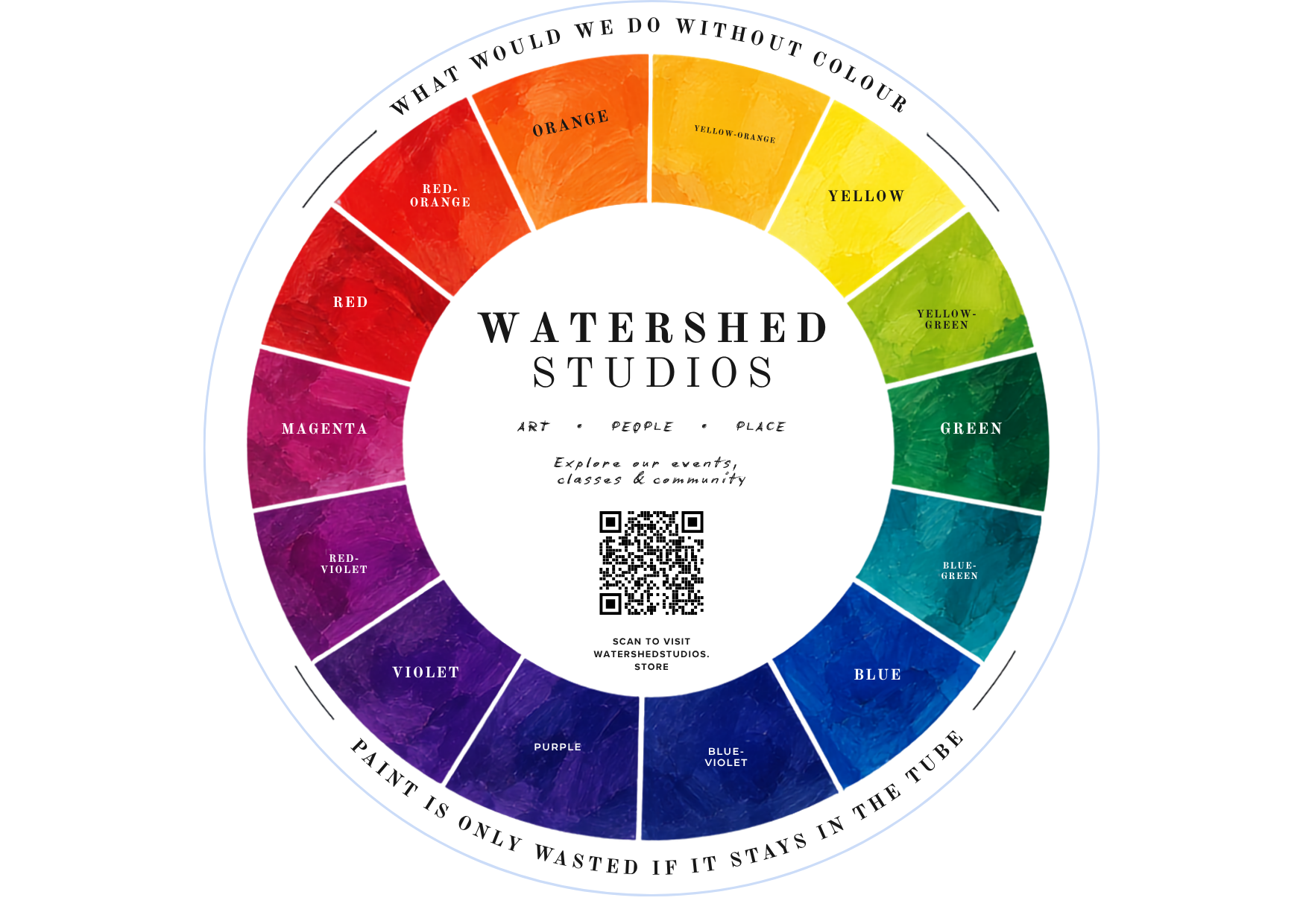
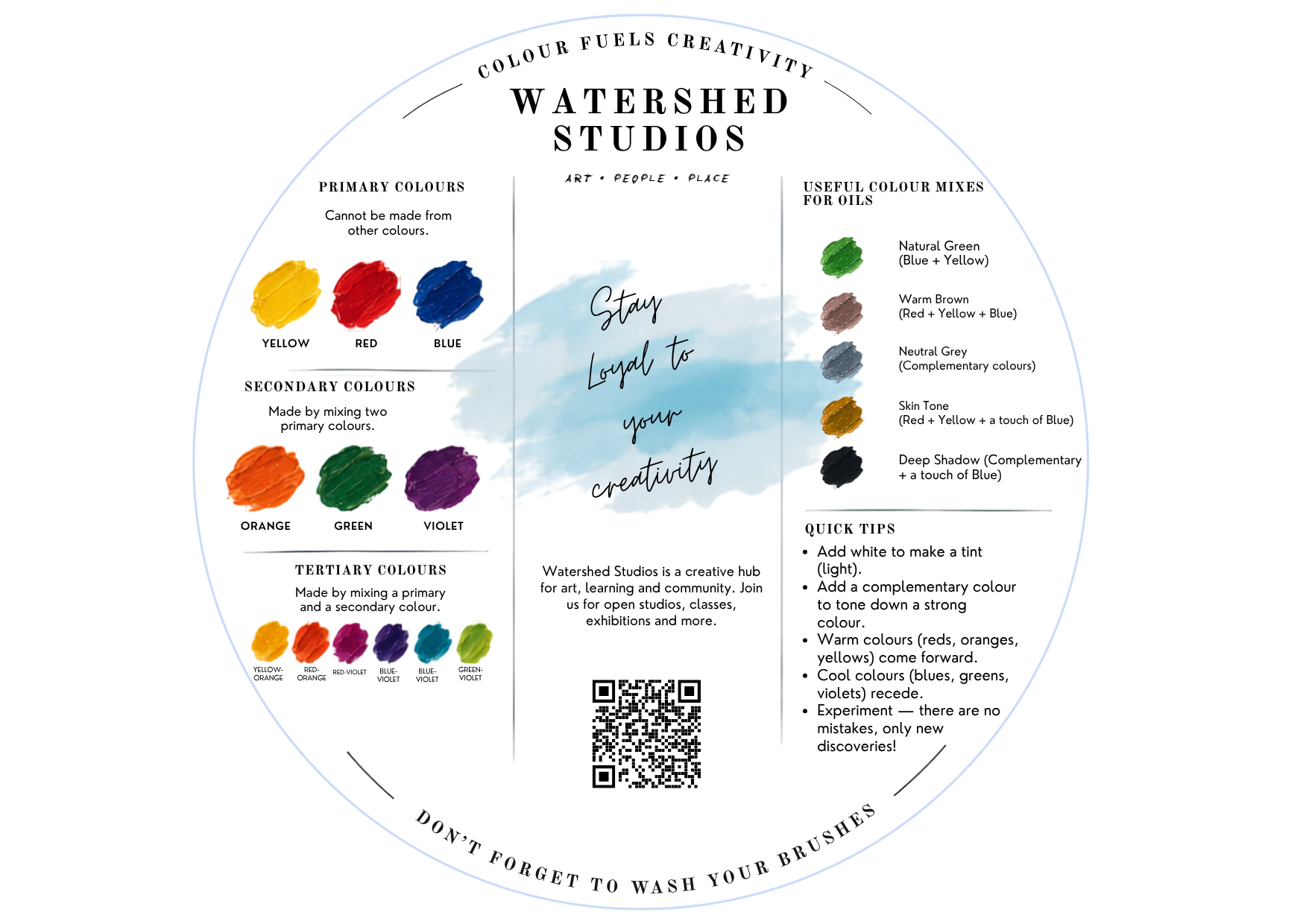
These are the printed colour wheels Grace uses in class. The first maps the full twelve-part wheel; the second covers primary, secondary and tertiary mixes with quick tips for oils. Keep them beside your palette as you paint.
Painting wet-on-wet in oils
Wet-on-wet, or alla prima, means painting into paint that is still wet. Layers blend directly on the canvas, edges soften themselves, and a finished painting can emerge in a single sitting. Here is how Grace teaches it.
- 1
Tone the canvas
Wipe a thin wash of diluted paint (a warm ochre or cool grey works well) over the whole canvas. This kills the white, gives you a middle value to judge against, and keeps the surface slippery so the next layers glide.
- 2
Block in the big shapes
With a large brush, lay in the main masses: sky, land, water. Keep the paint thin and the shapes simple. Do not reach for detail yet; you are arranging colour and value, nothing more.
- 3
Work dark to light
Establish your darkest darks first, then build towards the lights. Because every layer stays wet, each new stroke picks up a little of what is beneath it, which is exactly what gives wet-on-wet painting its softness.
- 4
Let colours mix on the canvas
Instead of over-mixing on the palette, place two colours side by side and nudge them together with a clean brush. The partial blend where they meet is more alive than any flat, fully mixed tone.
- 5
Keep the paint buttery
If a passage gets sticky or muddy, scrape it back with a palette knife and re-lay it fresh. A little linseed oil restores flow. Work with thicker paint as you go: fat over lean, so the painting dries evenly.
- 6
Finish in one sitting
Wet-on-wet (alla prima) means the whole painting is completed while the paint is still workable, usually in a single session. Step back often, and stop the moment the painting says what you came to say.
Learn it in person
Join Grace for a three-hour oil painting class at Watershed Studios, Bushy Park, Galway. €55 per person, basic materials included, and you are welcome to bring your own supplies.
See class dates and book